The quick answer
Caffeine borrows focus from later in the day — it masks tiredness rather than removing it, which is why the jitters and the 3 p.m. crash so often follow. Stimulant-free nootropics take the opposite approach: instead of revving your nervous system, they support what your brain runs on — blood flow, cellular energy and protection — for calmer, steadier focus. Pair one with good sleep, water and movement, and many people find they need far less coffee to get through the day.
Coffee is the world's favorite focus tool, and for good reason: it works fast. But if you have ever felt your hands buzz after the second cup, stared at the screen in a mid-afternoon fog, or lain awake at midnight after a late latte, you already know the price. That is why "stimulant-free nootropics" have become one of the most searched corners of the brain-health world.
This guide explains why caffeine focus comes with side effects, how stimulant-free formulas work differently, what to look for on the label, and how to build a routine that keeps you sharp from morning to evening.
Why caffeine focus comes with jitters and a crash
During the day, a chemical called adenosine slowly builds up in your brain and creates the feeling of tiredness. Caffeine works mainly by blocking adenosine from doing its job. You feel alert — but the tiredness has not gone anywhere. It is queued up.
- The crash. When caffeine wears off, the adenosine that piled up can hit all at once. That is the classic afternoon slump.
- The jitters. Caffeine also stimulates adrenaline-related pathways. In higher amounts, or in sensitive people, that means shaky hands, a racing heart and a scattered, anxious kind of "focus."
- The sleep cost. Caffeine lingers in the body for hours. An afternoon cup can still be active at bedtime, and poorer sleep means a foggier tomorrow — and more coffee.
- Tolerance. Over time, the same cup does less, so the dose creeps up.
None of this makes coffee bad. The FDA notes that up to about 400 mg of caffeine a day is not generally associated with negative effects in healthy adults. But if you are hitting that ceiling and still struggling to focus, the problem is not a lack of caffeine.
How stimulant-free nootropics work differently
A stimulant pushes the accelerator. A stimulant-free nootropic works more like a tune-up: it supports the everyday systems your brain needs to perform well, without forcing anything.
| Caffeine-based focus | Stimulant-free nootropic | |
|---|---|---|
| How it works | Blocks tiredness signals, revs the nervous system | Supports blood flow, cellular energy and protection |
| How it feels | Fast lift, sometimes edgy | Calm, steady, gradual |
| Afternoon | Often a crash | No crash to recover from |
| Sleep | Late doses can disrupt it | No stimulant to keep you up |
| Best used | Occasionally, for a quick boost | Daily, as a consistent routine |
What to look for in a stimulant-free formula
Stimulant-free nootropics come in different styles. Here are the ingredient families worth knowing:
- Blood-flow support (L-arginine, L-citrulline). These amino acids are the body's raw materials for nitric oxide, the molecule that relaxes blood vessels. Since the brain uses roughly a fifth of the body's blood supply, healthy circulation is a natural foundation for clear thinking. We cover the science in blood flow and your brain.
- Cellular energy (niacin, vitamin B3). Niacin helps the body make NAD+, a coenzyme every cell, including neurons, uses to turn fuel into usable energy — energy without a stimulant.
- Protection (beta-alanine). Beta-alanine helps the body build carnosine, a compound with antioxidant properties.
- Calm focus (L-theanine) and memory herbs (Bacopa). Common in other stimulant-free blends, these take a more neurotransmitter-focused approach.
Label checklist
- Check for hidden caffeineGreen tea extract, guarana, yerba mate and "natural energy blends" are all caffeine sources. A true stimulant-free formula has none.
- Look for a clear ingredient listYou should be able to see exactly what you are taking.
- Prefer once-a-day simplicityConsistency is what makes a nootropic routine work, so easy beats complicated.
- Insist on a real guaranteeA meaningful money-back window lets you judge the results in your own life.
Where VapoCept fits
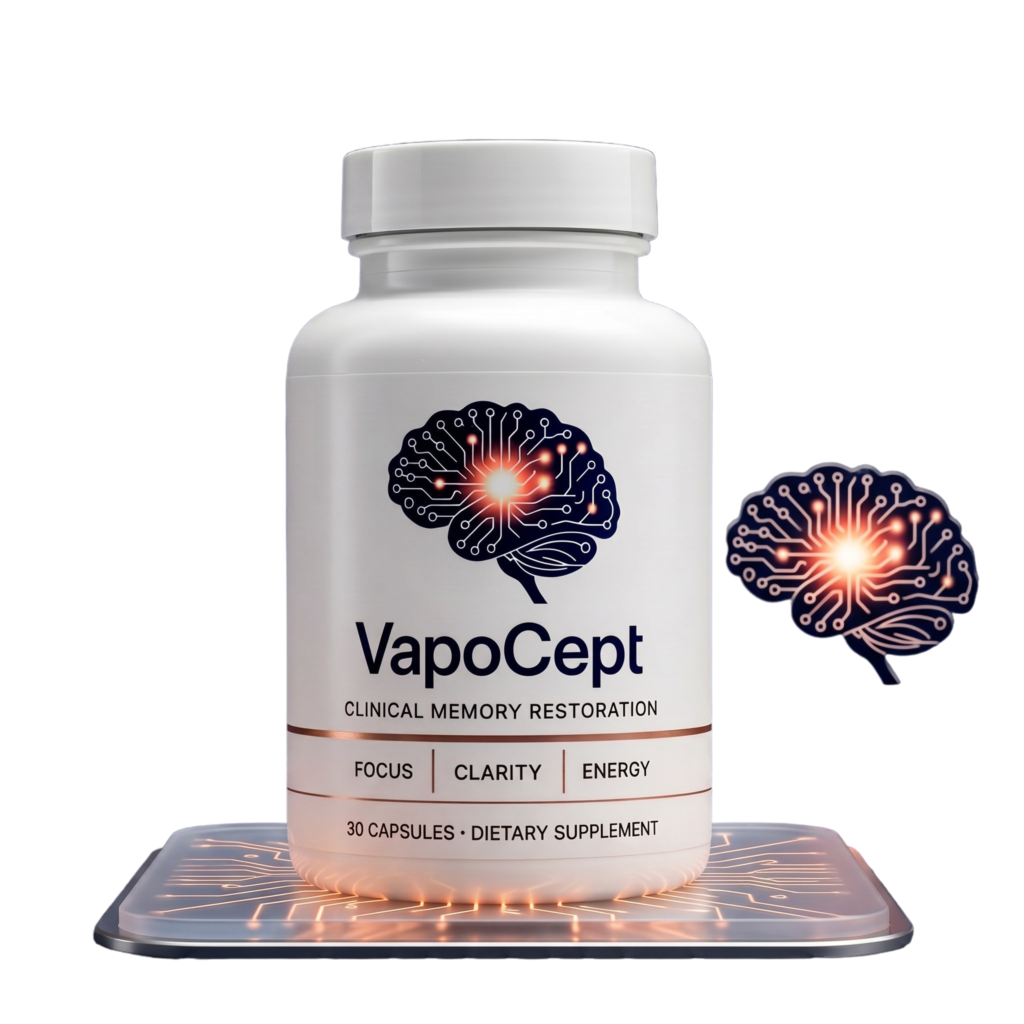
VapoCept is a good example of the blood-flow style of stimulant-free nootropic. Each once-a-day capsule combines L-arginine, L-arginine AKG, L-citrulline (HCL and malate), niacin (B3) and beta-alanine — covering circulation, cellular energy and antioxidant protection in one simple step, with zero caffeine. Users most often describe the effect as clean, steady clarity through the day rather than a spike and crash.
It is a one-time purchase with no subscription: 6 bottles at $49 each (most popular, free shipping), 3 bottles at $69 each (free shipping) or 2 bottles at $79 each, all backed by a 60-day money-back guarantee. Two small notes: it is sold only through the official site, and like every daily nootropic it works best with a few weeks of consistent use.
Official site · one-time purchase · 60-day money-back guarantee
A calm-focus day, step by step
- Morning: water first, then your nootropicEven mild dehydration dulls concentration. Take your once-a-day capsule with a full glass of water.
- Delay the first coffeeIf you still drink coffee, many people find waiting an hour or so after waking, and keeping it to one or two cups, smooths out the day.
- Work in focused blocksSilence notifications and give one task 45–90 minutes. Attention is a skill, and fewer interruptions mean less mental fatigue.
- Move after lunchA 10-minute walk raises blood flow and is one of the best natural defenses against the afternoon slump.
- Set a caffeine curfewStopping caffeine by early afternoon protects tonight's sleep, which is tomorrow's focus.
If your fog feels heavier than ordinary tiredness, our guide brain fog, explained: what actually helps walks through the everyday causes, from sleep to blood sugar. And if focus or memory problems are sudden, severe or getting worse, see a doctor — that deserves a proper check-up.
Frequently asked questions
What is a stimulant-free nootropic?
A stimulant-free nootropic is a brain-support supplement that contains no caffeine or other stimulants. Instead of revving up your nervous system, it supports the systems your brain relies on every day, such as healthy blood flow, cellular energy and antioxidant protection, for steadier focus without jitters or a crash.
Why does caffeine make me jittery and then crash?
Caffeine works mainly by blocking adenosine, the chemical that builds up during the day and makes you feel tired. The tiredness is postponed rather than removed, so when caffeine wears off the backlog can hit at once. Higher amounts can also trigger jitters, a racing heart and anxiety in sensitive people, and late doses can disturb sleep.
Can I take a stimulant-free nootropic with coffee?
Many people do. Because a stimulant-free formula adds no caffeine, it does not stack on top of your coffee the way an energy-drink-style focus product would. Some people use it to cut back from several cups to one. If you take medication or have a heart condition, check with your doctor first.
How long do stimulant-free nootropics take to work?
They are designed for steady, cumulative support rather than an instant buzz. Give a once-a-day formula several weeks of consistent use, and judge it on how your focus holds up through the afternoon rather than on the first hour.
Is VapoCept stimulant-free?
Yes. VapoCept is a once-a-day capsule built around L-arginine, L-citrulline, niacin (vitamin B3) and beta-alanine, with no caffeine or stimulants. It takes a blood-flow approach to brain support, aimed at steady clarity and focus through the day.
How much caffeine is too much?
The FDA says up to about 400 mg a day, roughly four or five cups of brewed coffee, is not generally associated with negative effects in healthy adults. Sensitivity varies a lot, though, and pregnancy, some medications and heart conditions call for less. Your doctor is the best guide for your situation.